Yara Simon · 28 September 2026
Decoding Integration Challenges Between Analytics Platforms and Historical Ranking Archives in Multi-Market SEO Campaigns
Professionals working in search engine optimization frequently encounter obstacles when attempting to align live analytics platforms with archived ranking data from multiple geographic regions, and these issues intensify in campaigns that span several countries with distinct search behaviors and regulatory environments.
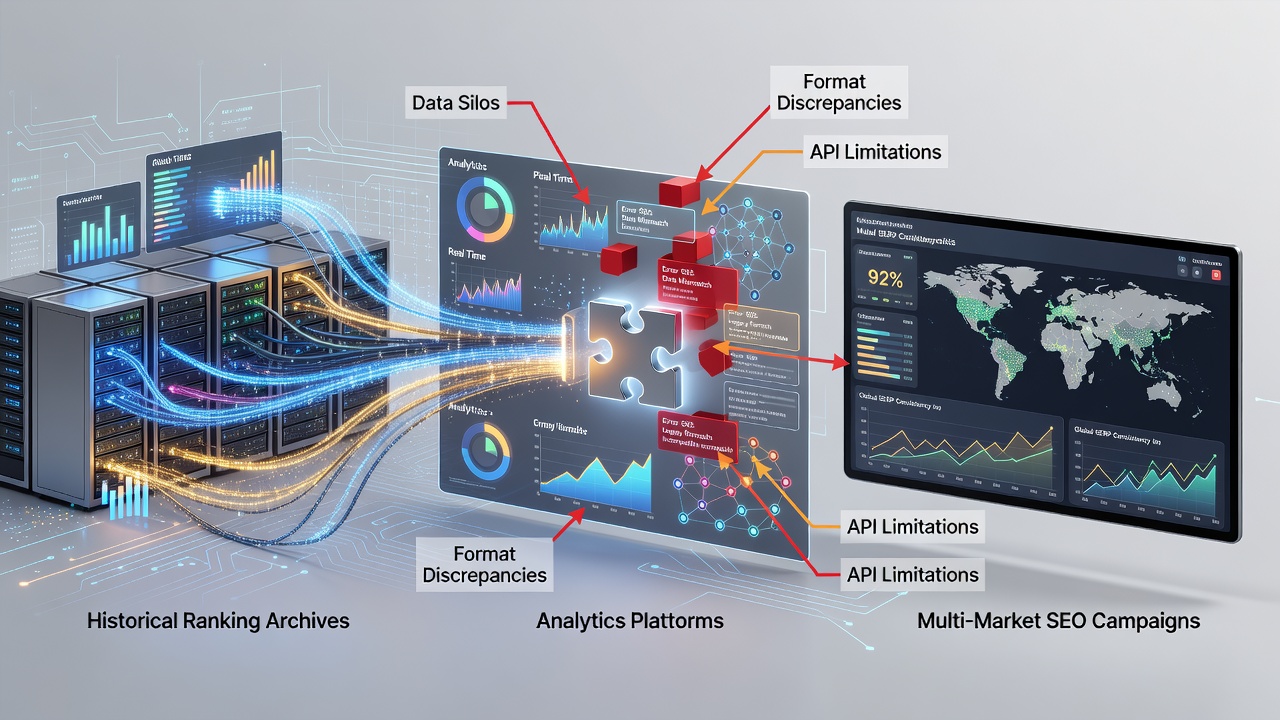
Data format inconsistencies create the first layer of difficulty because analytics tools record user interactions in real time while historical archives store positional rankings in static snapshots that often use incompatible schemas, and teams must normalize these structures before meaningful comparisons become possible across markets like North America, Europe, and Asia-Pacific regions.
Data Synchronization Barriers in Global Campaigns
Real-time analytics systems capture metrics such as bounce rates, session durations, and conversion paths continuously, yet historical ranking archives from third-party providers deliver weekly or monthly position reports that lack corresponding timestamps aligned to the same time zones, so synchronization requires custom scripting and careful handling of daylight saving shifts that differ by market.
API rate limits imposed by both analytics vendors and ranking data services further complicate matters because large-scale campaigns generate thousands of queries per day, and exceeding these thresholds forces analysts to stagger data pulls which delays the creation of unified dashboards that decision makers rely upon for strategy adjustments.
Regional Compliance and Privacy Considerations
Multi-market operations must navigate varying data protection rules, and observers note that platforms operating in the European Union face stricter consent requirements than those in other jurisdictions, which affects how historical ranking data can be joined with user behavior records without violating local statutes.
By September 2026 several regulatory updates had taken effect across different regions, prompting organizations to audit their data pipelines more rigorously before merging datasets from analytics platforms with older ranking archives that predate current privacy standards.
Technical Mapping and Schema Evolution
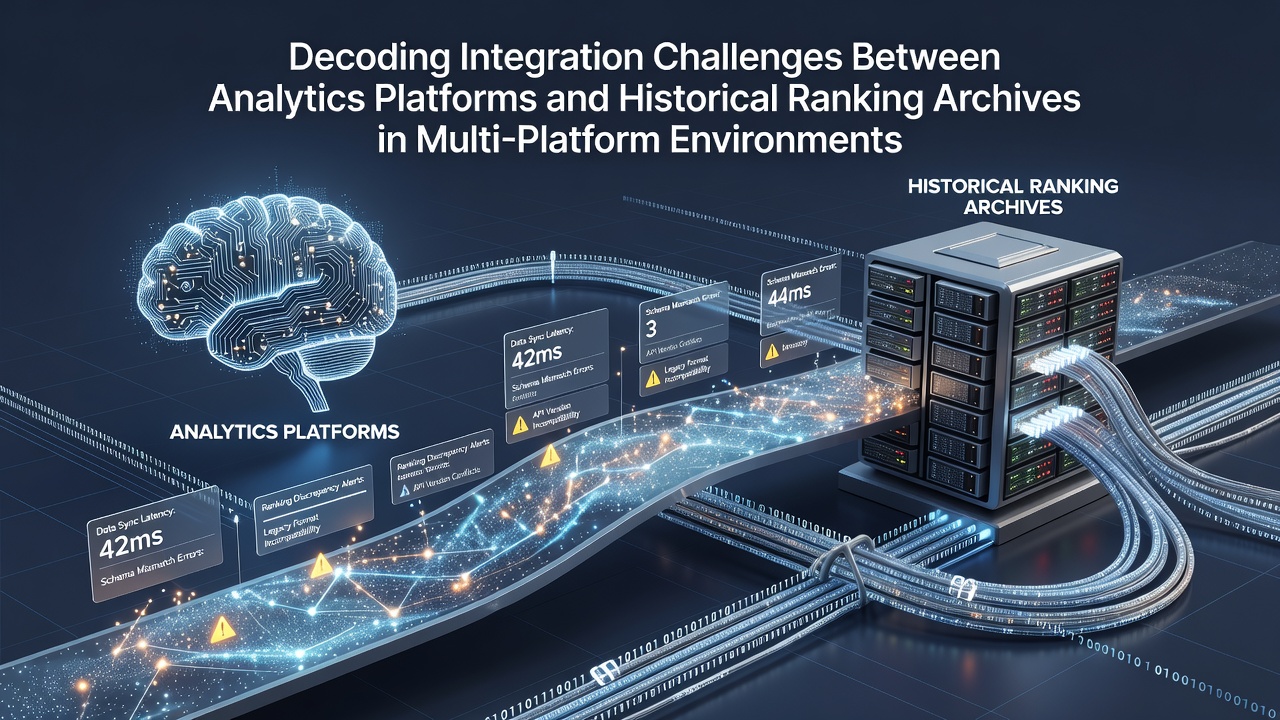
Schema changes occur regularly in both analytics platforms and ranking archives, and when a provider updates its data fields without backward compatibility, previously integrated historical records lose context and require re-mapping that consumes significant engineering resources across distributed teams.
Those who have managed such projects report that keyword taxonomies often diverge between markets because search intent varies by language and culture, so a single term may carry different commercial values in one country compared with another, which makes automated matching unreliable without manual oversight and localized validation rules.
Case Examples from Industry Practice
One research initiative examined campaigns spanning five continents and discovered that latency in data transfer between cloud-based analytics services and on-premise ranking archives frequently exceeded acceptable windows for timely reporting, prompting the adoption of edge computing solutions to reduce delays.
Another project involving a multinational retailer revealed that discrepancies in how mobile versus desktop rankings were archived created blind spots in performance tracking, and analysts had to develop custom filters to reconcile these differences before trend analysis could proceed accurately.
According to findings published by the OECD on digital economy metrics, organizations that invest in standardized data exchange protocols experience fewer integration failures when scaling analytics across borders, and these protocols help maintain consistency when historical ranking archives are updated retroactively by source providers.
Emerging Solutions and Industry Standards
Industry groups have begun promoting common data interchange formats that accommodate both real-time metrics and historical positional data, yet adoption remains uneven because legacy systems in some markets still rely on proprietary structures that resist standardization efforts.
Researchers at academic institutions have explored machine learning approaches to predict and correct integration errors before they surface in reporting dashboards, and early tests indicate these models can flag mismatches in keyword identifiers or timestamp offsets with increasing reliability as training datasets grow.
A report from Pew Research Center on global digital practices highlights that teams combining multiple data sources benefit from clear governance frameworks that assign responsibility for each dataset type, which reduces conflicts when analytics platforms receive updates that affect historical ranking interpretations.
Conclusion
Integration between analytics platforms and historical ranking archives in multi-market SEO campaigns demands careful attention to technical compatibility, regulatory alignment, and localized data nuances, and organizations that address these elements systematically position themselves to extract clearer insights from combined datasets while minimizing operational friction. Continued evolution of APIs and data standards will likely ease some of these pressures over time, although the complexity inherent in cross-border operations ensures that ongoing vigilance remains essential for maintaining accurate visibility into campaign performance.